Showing posts with label National Writing Project. Show all posts

Saturday, June 21, 2014

A Peek at My Week {6/22/14}

It's that time again....Time to start thinking about our week!
I am just beginning to recuperate from last week.  I spent two wonderful days in Warsaw, IN at the All Write 14 conference.  If you'd like to read about my experience, you can find it here.

Week #2 of summer break looks to be busy as well.  Here's what I've got going on:

My sister and her family are visiting from Dallas, where they moved a year ago.  It will be great to have them all back home for the week!  Ironically, the week they decide to come back home to Wisconsin is the week where our weather is taking a nose dive back into spring.  Here is the picture she texted us last night before leaving Dallas to show they were ready for Wisconsin weather, which is predicted to be in the 70's at best:
Also this week, I will begin the UW-Milwaukee Writing Project's Advanced Institute.  Last year, I participated in the summer institute and it was one of the best experiences of my life.  You can read about it here if you would like.  This summer, we will be meeting for half days to conduct research that we will turn into either a conference presentation or a journal article. 

For my project, I will be looking at the research behind the importance of teaching writing in our schools. Remember back when writing was one of the "3 R's" of a solid education? That's not always the case nowadays.  I'm proposing that we return writing back to the prominence it deserves and I will explain why in my article. I'm excited to begin!


Have a great week!

Sunday, July 28, 2013

The 12 Days of Fitness & Looking Ahead

Can it really be Sunday already???

I have read from several other bloggers that they go back to work tomorrow.  It's hard to believe that the summer has flown so quickly.  I don't go back until August 27th (the kids start the day after Labor Day) but we don't get out until June 11th next year so it all balances out in the end. 

My National Writing Project experience at UW-Milwaukee is over.  It was a GREAT time and I learned SO much.  I am looking forward to getting back into my classroom, school, and district to share some of the great things that I have learned.  (If you want to read about any of them, you can search by the "Labels" section to the right.)

So now that I can focus on something other than that, I am excited to link up with two great bloggers today for their linky parties.

First, the fabulous Joanne at Head Over Heels for Teaching.  I absolutely LOVE Joanne...she is absolutely hilarious and always has such great ideas on her blog. Not to mention, she shares my love for Post-Its.  I hope you will check it out!

We all know how important it is to have brain breaks in the classroom.  Sometimes, kids just need to get a little oxygen to their brains to keep that thinking moving.  That's where the Twelve Days of Fitness comes in!
Credits: 
Paper:  I Teach What's Your Superpower?
Font:  Hello Fonts by Jen Jones
Clip Art:  Jeanette Baker of Jason's Online Classroom
This active song, sung to the tune of "The Twelve Days of Christmas" is a great way to get kids moving in a very short amount of time and the students LOVE it!

You start off by singing, "On the first day of fitness, my teacher gave to me, one stork stand" and the students stand on one leg like a stork.  Then "On the second day of fitness, my teacher gave to me, two scissor kicks and a stoooorrrrrk stand" and act out both movements.  The song continues until all of the 12 days are finished....or you can roll dice to see how many days you will sing that time if you don't have time for all 12 days.

I wish I could take credit for this great idea, but it belongs to the California Department of Public Health and their Power Up for Learning campaign.  They have so many great ideas in this PDF about how to get students moving!  I hope you will check it out!

I also want to link up with Latoya at Flying into First for her Let's Get Acquainted linky.
This week's topic:
Upcoming School Year Goals
 
I have to admit, I am an overachiever when it comes to setting goals so I am going to try to limit myself to goals that I feel are really important to me this year (and not just "nice to try for").

1.   Incorporate the great ideas that I learned from the UWM-WP this summer.  So many great ways to get kids writing!  Specifically, I will focus on collaboration in writing and e-portfolios.

2. Share those great ideas with my colleagues to help them become better teachers of writing.  I am heading up my district's writing committee so this will be a great opportunity to share!

3.  Incorporate my technology into my classroom and instruction.

I think three is a good number, don't you?  I am going to focus really hard on these three things to make them happen! 

For those of you returning to work tomorrow, I wish you well!  May this be your best year ever! 

See you tomorrow for Monday Made-It with 4th Grade Frolics!

Thursday, July 25, 2013

My Boys are Back! & National Writing Project Days 13 & 14: Collaborative Writing

I'm sooooo excited that my husband and son have returned from the Boy Scout Jamboree!  They got home early this morning around 1:00AM.  Let me just say, they both took a hot shower before going to bed because they haven't had hot water for almost two weeks!

As I blogged last week, my son broke his ankle on his first full day at the Jamboree.  :(  Despite being on crutches, he still had a great time!  The doctors at the Jamboree removed his cast and gave him a temporary cast because his hard cast had gotten too wet from all the rain.  Here is a picture that his scout leader took as they were packing up to come home....that is muddy water his leader is standing in!
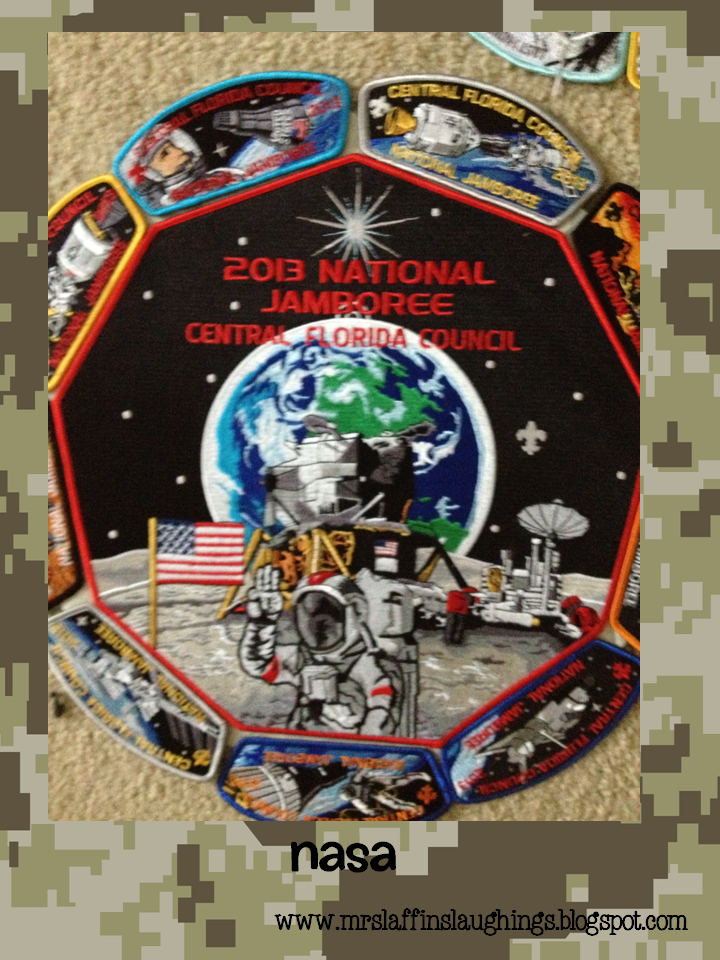
I'm glad to report that a broken ankle didn't stop Ryan from participating in one of the most frenzied activities at Jamboree....patch trading!  This is seriously crazy and I don't understand why.
 
The way it works is that each council designs a patch set to represent their district.  My son's district was from Milwaukee so their patch set was sponsored by Harley-Davidson.  Throughout the Jamboree, the boys walk around and trade their patches for others.  Some of them are very cool!  Here's a look:


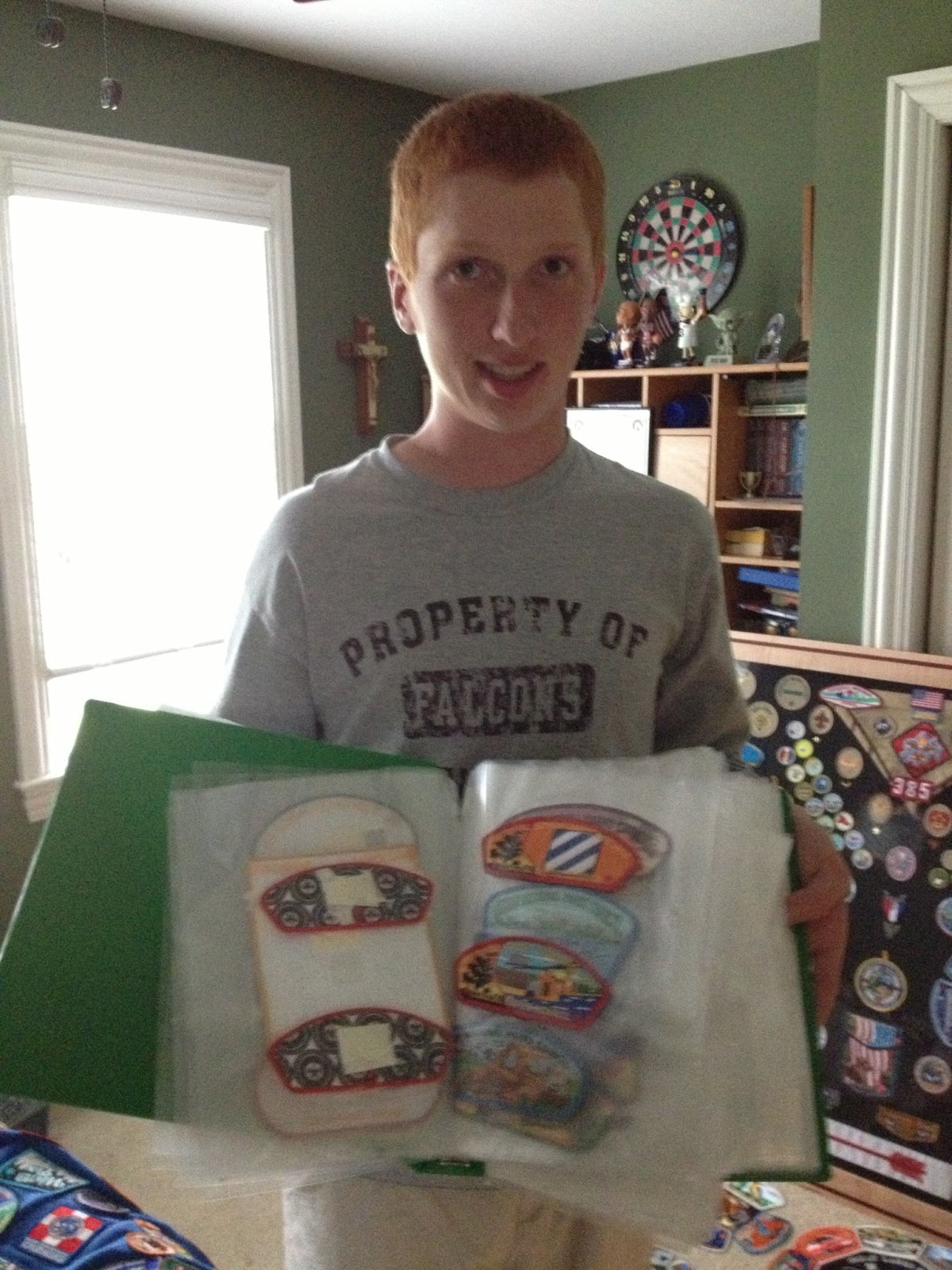
Ryan put together a binder of all of his patches...thank goodness I don't have to sew them on!

Now on to the writing portion of this program...  :)

Today at the UWM-WP, Shannon had a wonderful presentation about collaborative writing.  This really got me thinking...Writing is usually a solitary act between the writer and his or her pencil.  But we all know how collaboration can bring about great results and Shannon shared some great activity ideas:

1.  Add a Line:  Give students a stem such as "Johnny knew his trip to the canyon would be risky, but he didn't know.....".  Each student in a group gets a different stem.  They finish the stem and then pass it to their right.  The next person adds to the story, passes, and repeat until the stem has been all the way around the group.  Then the original person can choose to take the collaborative story and revise it or keep adding to it.  It is important that if you do this activity, you carefully model for students how to add a line and that first, they must reread the whole story before adding their line.
 
2.  Content Area Add a Line:  Just like above, but give a stem for something you are studying in a content area such as "The digestive system is one of the most important systems in the human body because...".  This time, students each add a supporting detail to the stem to show what they've learned.  The key here is that there are no repeating details allowed.

3.  Mr. Potato Head:  On a poster board, draw a stick figure (or a Mr. Potato shape).  Each team member is given a different color Post-It pack.  In five minutes, students brainstorm character traits for this stick person and add it to the poster board.  When time is called, the group uses the collaborative character traits to each write their own story.  So the main character will be almost the same for everyone, but the story line will be different. (The different colored Post-Its are to hold each student accountable for adding to the brainstorm and not letting others do all the work.)

4.  Dialogue First:  Partners each write a dialogue on Post-Its for two characters.  They then use the established dialogue to write a story.

Collaborative writing experiences can also occur in a Writing Circle format (see my post about Writing Circles from Monday here) and in the feedback/revising stage of writing.  I think it is a great idea for students to support each other as writers!

Tomorrow is my last day at the UW Milwaukee Writing Project.  I will be so sad to see it end, but I am so excited to take back what I've learned to my classroom, school and district!  Thank you for following me in this journey.  I hope you have learned some new tips for teaching writing!

Tuesday, July 23, 2013

National Writing Project Day #12: "I Wonder" Writing & Teaching Voice

As expected, I had another wonderful day at the UWM-WP!  I love that every day, I take at least one idea away that I can use in my classroom.  Today, I have TWO ideas to share!

First, "I Wonder" writing, shared by the great Michelle....

This is a great writing warm up or idea generating activity.  Using the stem "I wonder...", students generate a list of at least 20 statements that they wonder about. 

Here are some of my wonderings...

I wonder how many words I will read in my lifetime.
I wonder how Toby feels about Rosie.
I wonder if Lasik surgery would hurt (much).
I wonder how the birds know to wake up even before the sun comes up.
I wonder if my dogs understand me when I talk to them.

After generating a list of 20 statements, they cross out half of them to leave their ten favorites. 

Then the students have a writing choice (I love choice in writing!)-- they can either arrange all of their I wonder statements into an "I Wonder" poem, or chose one of their wonderings and write about it.

As I mentioned in previous posts, I have discovered that I love writing so I want to take this opportunity to share my wondering poem about how my older dog (Toby) feels about our newer dog (Rosie).

How Do You Feel?

You were probably perfectly happy until that day that we brought Rosie the Puggle into our family.
Dad would throw your tennis ball and you would chase it.
You would snuggle next to me on the floor and I would rub your belly.
As we ate dinner, you begged silently at my side, hoping for a treat from the table.
The kids would take you for a walk up the hill for a field trip away from home.

Life was good.

Then, one day, your life as an only-dog child ended.
Rosie arrived.

Now as you chase your tennis ball, she runs by your side, barking an obnoxious bark.
She snuggles on the sofa with me at night, a place where you are not allowed because of your shedding white hair.
You have to share the table scraps with her, as she sits on my other side begging too.
When it’s time for a field trip, she tags along…every time.

But I also wonder how your life has changed for the better.

You now have a companion who will help keep you young with her crazy antics.
You both play together, heads down, butts up in the air, as you taunt each other.
When we are not home, you have someone to keep you company so you don’t get lonely.
When it storms and the thunder scares you, Rosie can reassure you in dog language that it will all be OK.
Because she sometimes makes “bad Puggle choices”, you can watch as SHE gets yelled at.
 
Yes, life is good.

Because sometimes it takes the glass being half empty to realize that it was really half full.


I think I Wonder writing would be great to use at the beginning of a unit in science or social studies, to generate wonderings about a read aloud, or for general questions that the students are curious about.  It is similar to the "W" in a KWL, but takes inquiry to the next level as it adds the writing aspect.  We want to teach our students to be inquisitive and to learn how to ask questions, not just answer them, don't we?

The second thing I want to share today is a very cool activity for teaching VOICE in writing.  This activity came from Sara's inquiry project about teaching mini-lessons in the writing workshop. 

Voice is something that is so important to writing (it is one of the 6 Traits), but is difficult to explain, other than to say that voice is what makes your writing sound like you and not like someone else.

Here's an activity to make that concept more concrete.

Explain to your students that you will be asking them to put their heads down with their eyes closed.  Tell them that you are going to walk around the room and tap some of them on the shoulder.  If they get tapped, you want them all to say the same thing.  (Put a sentence on the board like "Fourth grade rocks!" or something simple like that.)

Walk around the room and slowly tap four or five kids and they say "Fourth grade rocks!"  Because everyone's eyes are closed, students are more tuned into their sense of hearing and can really hear each person say the sentence.

After four students have been tapped, have everyone share the difference in the way that each student said the sentence.  You will probably hear difference in expression, emphasis, accent, etc.  Explain to your students that while each student was saying the same thing, they all said it in their own unique way. 

Equate this to voice in writing.  We may all write about similar experiences or ideas, but our job as writers is to put our own unique "voice" to our writing.

Isn't that cool???

I hope that these two ideas are something you can use in your classroom!  Thanks for reading!

Monday, July 22, 2013

National Writing Project Day #11: Thought Museums & Writing Circles

 Hi Everyone!

I'm kind of bummed that I don't have anything to share for Monday Made It this week....it hasn't been a very good crafting week for me.  But I've got some new ideas floating around in my head for next week (now all I need is the TIME to get to them!  :)

Today at UW-Milwaukee Writing Project, I learned about two things I had absolutely no idea what they were before today. Kelly, one of our two presenters today, shared her inquiry project on Thought Museums & Writing Circles.

First, Thought Museums

The concept behind this is absolutely GENIUS and it would be so easy to do in your classroom!  The idea with Thought Museums is to get students thinking and writing all at the same time.

Take a poster board and in the middle of the poster board, tape a quote, picture, poem, etc. along with a simple direction such as "What does this poem make you think of?" or "What questions do you have when you look at this picture?".  It is helpful to have about three or four different boards so there is some variety.

Students then walk around with a pencil/pen and write their response on the poster board and sign their name by their comment.  But because this is a museum, it has to be absolutely silent.  After about 5 minutes, students return to their seat and you share thoughts, common observations, themes, etc. from the poster boards. 

Here are some pictures of our Thought Museum today:


As always, I like to reflect on ways this can be used in my classroom (and yours!):
 
  • As a preview activity in science where I post some pictures and main ideas and students respond
  • In math when I post a math question such as "How did you use math today?" and students respond
  • Posting quotations from a book we are reading and students share their connections
  • In character education when students respond to a prompt such as "What does respect look like?"
Really, the possibilities are endless!  I hope you will give Thought Museums a try!
 
Now on to Writing Circles...
 
You may be familiar with Literature Circles in reading class.  Well, Writing Circles are somewhat similar, but unique in their own way.
 
Writing Circles are used in the writing classroom about once a week to promote collaborative, supported writing activity for all students.
 
There several component to Writing Circles, but due to space and time, I will try to highlight what I learned here to give you the idea:
 
1.  Group:  Divide your students into groups of about 4-5 students.  Have each group come up with a name for their group (consider it to be something they all have in common, like my group was called "The Procrastinators" :)
2.  Brainstorm:  Each student is given three notecards.  On each notecard, each student writes 1-2 words of a very broad topic (pets, vacation, school, family, memories, sports, etc.). 
3.  Collect & Distribute:  One student collects all of the cards and shuffles them up.  He then deals three random cards to each person in the group.
4.  Discard:  Each student looks at their three cards, chooses one of the three that she would most like to write about and discards the other two.
5.  Rating:  Students then pass their ONE card to the person on their right.  This person looks at the topic and rates it by putting a small symbol in the top of the notecard.  They use these symbols to rate: 
          * = I would be excited to write about this topic
          + = I could write about this topic
          - = I am NOT interested in this topic AT ALL
Continue to pass the cards to the right and rate them until students get their original card back.
6.  Choose a Topic:  Based on the ratings, students choose the topic they will ALL write about.  It will probably be the topic with the most stars (*).
7.  Writing: Students take a designated amount of time (20 minutes?) to write about their topic.  Students each CHOOSE the genre they will write in, but the topic has to be the same for all group members.  For example, if the topic is "Travel," students could write a poem, a narrative, a vacation review, a newspaper article, an email, etc.
8.  Peer Feedback:  Students then come back together as a group.  They take turns reading their writing out loud to their group.  However, before reading, they tell their group members exactly what kind of feedback they would like.  This is very important as it really helps with the feedback process.  Here are some ideas:
          Connections you had
          Questions that popped in your head as I read my writing
          Does my word choice sound right?
          What did I do well?
          Suggestions for revision
9.  Future Use:  Students can then add this writing to their writer's notebook to use as a writing piece they will take through the entire writing process at a later time if they like it.
 
How do you assess the Writing Circle? 
- Student self reflection and/or group reflections
- Rubric
- Anecdotal record
- Finished product
 
Why use the Writing Circle?
- Promotes collaborative learning
- Teaches students how to seek and provide effective feedback
- Students are offered choice
- Students are in control of this writing time
- It generates new ideas & gets kids writing about topics they may not have chosen for themselves
 

There is an excellent resource available that goes into much more detail called Writing Circles by Jim Vopat.  I am excited to say that my friend, the UPS Man, will be delivering this gem to me very soon!  Can't wait to read it and then I can write more later!!


This is something I definitely want to share with my 4th grade team and the 5th grade because I am so excited about it.  I think it would be awesome if we could all get our students involved in Writing Circles.  (So Jamie, Mickey & Bridget, if you are reading, get ready!  :)
 
Have you ever used Writing Circles in your classroom?  How do you get students to work collaboratively on writing?  I'd love to hear from you!!
 
Until tomorrow!

Saturday, July 20, 2013

National Writing Project Days #9 & 10 -- Sticky Walls & E-Portfolios


It's hard to believe that my second week with the UW-Milwaukee Writing Project is over.  One more week left...  :(

This has been such an AMAZING experience!  I have learned so much about new ways to teach writing.  As an added bonus, I have also discovered how much I love to write!  We do tons of writing at UWM-WP, because as our fabulous leader, Karen, reminds us, "Teachers who write make the best teachers of writing!"

I hope you will look into getting involved with a Writing Project at a site near you!  You won't regret it!!
I want to share a neat trick I learned about at UWM-WP that we refer to as the "Sticky Wall."   Our co-leader, Jenny, introduced us to this fun idea.  (Her favorite color is orange, I just wanted to add .... : )
To make a sticky wall, take a piece of nylon from the fabric store (a vinyl tablecloth might work as well) and spray it with adhesive spray which you can purchase at a craft store like Michaels or Hobby Lobby.
 

And voila!  An instant place for students to place papers, notes, wonderings, questions, compliments and much more.


Why use a Sticky Wall instead of Post-Its?  I don't know about you, but Post-Its always end up fluttering to the floor in my classroom.  They just don't stick long enough for me, especially when hanging on a wall.

Now on to the presentation...

On Friday, Carrie presented her inquiry project on using e-portfolios for student writing.  She began with this cute (and totally hilarious!) commercial video:  (It's only 40 seconds long.  Give it a look!)

 So....are you an "Emma?"

I am!  Or at least, I partly am....

I'll admit, there are some things I still prefer to hold in my hand on a piece of paper.  There are other things I'm OK with being electronic.  For instance, I now prefer to read my books on my iPad (although I thought I NEVER would).  I also keep our family calendar electronically.  However, I also have file folders and file folders full of paper at school.....some of which I will never look at again.  How sad...

Storing student writing electronically is an awesome idea!   There are so many benefits to using e-portfolios with students:
  • It increases student motivation and engagement-- Students take ownership of their portfolio and decide what work goes in it.
  • The link between home and school is strengthened as parents can access their child's portfolio to stay involved.
  • They provide a forum for student goal-setting, self-assessment, and reflection.  E-portfolios can be used to show how students are meeting the standards and show growth.  They make progress more visible and are a great formative assessment tool.
  • They develop 21st Century skills and support lifelong learning.
  • My favorite reason.....E-portfolios support collaborative learning and an AUTHENTIC audience as students share their writing with others (and the world!) and provide feedback through commenting on other writing.

There are a few sites that Carrie shared that would be helpful in getting started and for learning more about e-portfolios.


I have used Kidblog in the past, but not to the extent of the possibilities that I learned about on Friday. 

If you want to learn more about using e-portfolios in your classroom, Carrie shared an awesome wiki put together by Kathy Cassidy with TONS of information about getting started and ideas for using e-portfolios:

I am ready to give e-portfolios a try and to give up a little bit of "Emma-ness."

How about you?  Do you use e-portfolios in your classroom?  If you do, please leave a comment and share your experiences with all of us!

Thanks, as always, for reading!

Wednesday, July 17, 2013

National Writing Project Day #8, Texture Texts & Writing to a Body Part

Happy Wednesday Everyone!

Before I begin recapping my day at the UWM-WP, I have to share that I got some bad news on my way home from Milwaukee.  Before I left campus, I checked my phone and found this picture of my son, Ryan, and a text from my husband.
 
Ryan fell at the Boy Scout Jamboree and broke his right ankle in two places.  (My husband is out there serving on the EMS team and was the driver who got to pick Ry up from the hospital.)   

Big time bummer!!!

He is on crutches now with a cast which is really unfortunate because he was signed up to go white water rafting later this week and I'm not quite sure how he's going to get around the camp (it's on a mountain) with crutches.  I will talk to my husband later tonight to see if I will be driving out to West Virginia this weekend to pick Ryan up.  Hopefully not....please keep your fingers crossed for me.

Now on to brighter times....

Today at the UWM-WP, Jody taught us about something called "texture texts."  I was not familiar with this phrase so it was a very interesting presentation.

You know how in your class you teach a novel to the whole class?  Well, sometimes you might include some additional "texts" such as songs, movie trailers, photographs, famous speeches, advertisements, etc., to help your students understand the main ("fulcrum") text.  Well, those additional texts are called "texture texts".  Jody shared how these texture texts can be analyzed and written about to help increase critical thinking and comprehension.

Also this morning, we met with the Teen Writers Academy at UW-Milwaukee for a shared writing experience that was so awesome and will definitely be finding its way into my classroom this fall.

For this activity, we were asked to personify a body part (either one we loved or hated) and write a letter to it.  We then switched letters with our teen writer, and we responded to each other's letter.  I want to share my letter to demonstrate:

Dear Hair,

                Some days, it seems like you’ve taken on a life of your own.  As much as I try, your will to do whatever YOU want to do wins over MY battle to control you.

                I wash you, dry you, flat iron you, piece you into place.  I spray your lightly with hairspray to try to get you to stay.  However, when I finish, it’s as if your strong willed wild-child side takes over.

                You begin to frizz, flatten and flop.  No matter what I do, you will not conform to my ways.  With a mind of your own, you put the “bad” in “bad hair day.”

                                                                                          With Disdain,

                                                                                          Me Who’s Having a Bad Hair Day

Sophie, my teen writing partner, wrote this thoughtful response:

Dear Bad Hair Day,

                Well, I must say I’m not appreciated, am I?  Here I sit, day after day, with wind blowing, icy raindrops falling, heat baking, and you say I’m frizzy & floppy.

                No, no, no…Remember that wedding you once were at?  (Or was it a party?)  I forget, but the compliments we got were up the kazoo!  I mean, I was even adored by YOU!  Now think….Am I bad, or is it YOU? 

I look adorable, sitting like a crown while your hands flutter, your face in a frown.  I’m a place for those glasses you seem to wear.  I’m a layer of pure style between your scalp and air!  I can feel when you storm & brew wanting your hair to look nothing like you.

 But others are jealous!  I share no lies!  I’m perfect just as you.  We will always be fit together.  I’m on you like glue!

                So look no further, I am here to stay, but please just love me.  I look fine, I tell you.  Believe me, there’s not much else I can do.  Your brain says I have to stop.  But remember, I’m always up there.

                You’re welcome!

                                                                                                From,

                                                                                                Your Stylin’ Hair

Isn't this awesome for a 20 minute writing activity?  Imagine how you could do something like this in your classroom...

  • Solving math problems
  • Content area questioning and discussions
  • Reading response from a read aloud
  • Teaching point of view
  • Teaching figurative language like personification
  • And so on!
Plus, this is collaborative learning!  I love it when I find something good I can use in my classroom.  I hope you did too!

It's so hot here I think I'm headed for the pool.  My poor dogs have really been having a hard time with the heat.  However, Toby found the perfect place to hang out -- right in front of the fan!


Thanks for reading! Have a great evening & stay cool!

Tuesday, July 16, 2013

National Writing Project Day #7 & Conferencing with Writers

Let's begin with a question...

How do you conference with your student writers?

Successful conferencing about writing is one of the most difficult things to do as a writing teacher.  It's hard to put our teacher hat and red pen away to talk with our students in a way that will help them grow as writers.

Today, Mary talked with our group about conferencing with students during the writing workshop.

What did conferencing used to look like in my classroom?

* Student sits down and hands me their writing
* Using my pen, I circle their spelling errors, add punctuation, and note places where they need to add paragraphing
* I tell them what to change
* They leave

No where in the conference did the students talk about their writing or set writing goals.  :(

Thank goodness that was the "old way!"  Through Mary's presentation and the professional reading I've done, I have learned more effective ways to use the conference to help my students grow as writers in a way that they are accountable and leading the way for their growth.

From Mary's research of Lucy Caulkins, I learned that there is a framework you can follow for conferencing with students. Many of us already do some of these steps, but doing all of them will make good use of our conferencing time.

1.  Research:  Ask your students questions ("How is your writing going today?")  Have your student read their piece out loud to you and share any concerns or struggles they are having.  Be sure to compliment your student on something from their writing -- it will help build confidence!

2.  Decide:  As your student is sharing their concerns and reading their writing to you, notice something that your student needs to work on and decide that this will be your teaching point.

3.  Teach:  Deliver your teaching point.  ("I'd like to share an idea with you about how to add dialogue to your writing.")  This is a great place to get out those mentor texts and look to see how the experts do it!  Guide your student through questioning whenever possible.

4.  Link:  Have your student share how he can use this in his own writing, not just for this piece but for all pieces.  It's important to work on the process here, not necessarily the product...How can this teaching point help the student grow as a writer when they apply it to future writing?

I feel it is important to note that at no time does the teacher touch the student's paper....this takes away the ownership from the student.  (Also removes the urge to use that red pen for editing.)

I think that as students get into the older elementary grades and/or become more comfortable with conferencing, THEY will be able to determine the "Teach" section -- they know what they need to work on and you can supply a quick mini-lesson or refer to a mentor text at this point. 

When I did conferencing with my students this past year and asked them what they thought they needed to work on, 95% of the students said the same thing I would have said.  Give the students that autonomy and it increases ownership!

On a side note, it is my baby girl's 14th birthday today!  I don't know where that time went...I certainly don't feel old enough to have a 14 year old!  Anyways, her grandparents came down from Appleton and we took her out to dinner and then back to the other grandma's for cake.  Here's a picture of the birthday girl...

Time sure does fly! 

As always, thanks for reading!!  :)

Monday, July 15, 2013

National Writing Project Day #6 & The Five Paragraph Essay

Welcome back to Post #2 on this Monday! Have I mentioned how much I LOVE my experience with the National Writing Project

We had a very interesting presentation today at UWM-WP (University of Wisconsin Writing Project) by Lisa who discussed the need for us to rethink the standard five paragraph essay.

How many of you teach the standard five paragraph essay (5PE) as a formula for writing when it comes to expository writing?  Do you have a poster or graphic organizer for writing that looks anything like a hamburger??

(I am raising my hand too...)

A question for you to ponder...

Should writing be more like a box of Kraft Macaroni & Cheese, where you follow the directions and get the same result every time?  Or should writing be more like gourmet cooking, where you add your own special touches in an effort to get your dish to turn out to be something special?

Yep, I'd pick gourmet cooking every time....

The 5PE is the standard mode-of-operation in classrooms all across America.  However, when you really stop to think about it, when in life have you been asked to write a 5PE?  I personally can't think of any after I left school....I write until I get the job done, be it in two paragraphs or ten.

People who have supported the teaching of the formula for the 5PE have felt that mastering the structure is preparing kids for college.  However, according to Lisa's research, many colleges spend the first semester of college writing class RETEACHING students how to write.  We have programmed our students so strongly to follow the 5PE formula, that they are unable to think analytically and creatively.  We have taught them, without so much as saying so, that writing is more about the product (the 5PE) than the thinking behind their process.

And writing instruction really should be about the PROCESS....

We need to teach our students to write in a variety of ways so that writing becomes a transferrable skill.  Writing is not a formula.  It is not math.  We don't want the same result every time....

If you look at the Common Core, it states: 
CCSS.ELA-Literacy.W.4.4 Produce clear and coherent writing in which the development and organization are appropriate to task, purpose, and audience.

Sometimes this writing might be a 5PE, but at other times it could be a letter to the editor, a movie review, a speech script, a RAFT, etc.

I understand that in the younger grades, some children need the scaffolded structure of the 5PE to be able to write.  However, I am advocating that we teach the 5PE as one genre, not THE genre.  Teach them the skills to write a 5PE, help them understand the parts (thesis, main idea, details, evidence) and WHY they matter, and when the 5PE is an acceptable form of writing.  Let their thoughts determine the product, not the other way around.  We should not stifle their creativity and thinking by requiring the 5PE all of the time, for all expository writing.

Teach the process, not the product.

On a side note, we were able to get out of our small gray, windowless room to do some on-site writing this afternoon.  We went down to Bradford Beach in Milwaukee and boy, was it awesome!  I am so excited by what I was able to write with the beach, people, and passers-by as my inspiration.


I may feel a novel coming on....  :)

Thank you SO MUCH for reading!  I have received some great feedback about the ideas I share with my NWP experience.  I'm glad that I can be a part of the conversation about making writing a priority in our classrooms.  Please email me with any questions!

Until tomorrow....

Saturday, July 13, 2013

Reading Like a Writer

So I was in Hobby Lobby last night and was stopped dead in my tracks when I saw this...
It seems like I had been transported to the North Pole instead of Racine, Wisconsin...

Christmas???  Already??? 

I know it's because there are a lot of crafters out there who need these supplies to get ready for this big holiday...which is still six months away...but I have barely gotten through the 4th of July yet.   Oh well...

Yesterday I wrote about using mentor texts in the revision stage of writing.  If you missed that post, scroll down or you can click here

Using mentor texts in writing is one of the best things you can do! Why not teach your students to learn from an expert?   As a teacher, using mentor texts in your writing instruction is like having a writer-in-residence and a teaching partner in your room.  You never have to be alone in the teaching of writing again!

If you stop to really think about it, everything we have learned in life, we have learned from someone else -- riding a bike, knitting, baking, driving a car, writing a blog :).  Writing should be no different!  We learn from the authors of the books we've read, the experts that have come before us.

Many of us have used mentor texts -- but usually at the beginning of the writing process.  I am advocating for bringing in mentor texts during revision

Why revision?  Because the when students draft, they are not producing their best work. They are just getting their ideas down on paper.  In revision, students are given the opportunity to improve their writing, make it better, make sure it says what they want it to say.

Think about how we revise our lives....If we try a recipe and it doesn't work, we may try it again.  When we craft, each time we make something it gets better.  In sports, we practice and repeat to help our game improve.  Kids play video games over and over to get a better score.  Our life is one big revision, isn't it?

Just reading a mentor text is not enough.  You need to teach your kiddos how to read like a writer

Here are some suggestions:

  • First, a text should be read a time or two for comprehension.  Kids need to understand the story so they can free up their brainpower for looking at the writing in a different way. 

  • Next, students will need to be taught to put on a different pair of reading glasses, so to speak, so they know they will be looking at the "how" of the writing, not the "what."

  • Teach students to slow down and reread many times, looking at the "how."  Rereading is very important!

  • Focus on a small part of the reading.  For my activity for my presentation, I passed out a bunch of picture books and I asked the group to simply focus on the introduction.  They went around the table and read the first line of each story out loud then talked about what they saw.  Patterns started to emerge here.

  • Develop a common vocabulary for the things you see.  If you see that several authors are beginning their writing by talking about interesting details about a character, call it 'character development' or something like that.

  • Discuss how this technique helps you as a reader -- does it create a certain mood, set a tone, help you make a connection, etc.

  • Talk about how students can apply what they've read to their own writing. This is very important because students need to be able to see how their mentor text can help them improve their writing.

  • Encourage them to be purposeful in giving it a try!

For my presentation, we focused on introductions because I feel they are one of the most important parts of writing.  You need to snag your reader into your writing or they will walk away.  Also, many students really struggle with introductions, and it paralyzes them so they don't write.  Using mentor texts is a great way to get them started.

Here are some other techniques you can use mentor texts to discover:

  • Use of figurative language
  • Sentence structure -- use of fragments, many one-syllable words in a row, etc.
  • Repeating words and phrases throughout
  • Use of dialogue
  • Humor, facts, tension, etc.
  • Character development
  • Strong endings (Note that "The End" are not the last two words in most stories :)
I hope you will give using mentor texts during revision a try!  Because this was my own presentation, I have lots and lots to say (in case you couldn't tell!).  If you have any questions or need more resources to read about this topic on your own, just let me know!

Have a great Saturday!

Friday, July 12, 2013

National Writing Project Day #5 & Revising Revision

Whew!!  Is it Friday already???  We have had a beautiful week here!  I want to share a quick pic of my flower garden from this morning.  I wish I could have stayed and stared at it longer, but I had to get to class.
 
Speaking of flowers, my husband is at the Boy Scout Jamboree and sent me these...


They are alstromeria, one of my favorite cut flowers.  Isn't he sweet????

One week down and two weeks left for the UW-Milwaukee Writing Project.  I am learning SO MUCH about new ways to teach writing.  I can't wait to get back in my classroom to try them out!  Again, if you get the chance to get involved with a local Writing Project chapter, I hope you will do it!

My big presentation was today.  THANK YOU so much to those of you who sent words of encouragement!  They really, really helped!  :)

My Teacher Inquiry Workshop (TIW) was about using mentor texts to revise writing.  I picked this topic because....1) I knew nothing about it; 2) I have a gazillion picture books; 3) I struggled with how to teach my students effective revision strategies, and 4) I am tired of the "one and done" mentality toward revising.

Many of us have used mentor texts in the writing classroom before, but we usually use them during the mini-lesson stage.  I am suggesting (as a result of my research) that mentor texts be used in the REVISING stage instead.

Consider how many students write...

The usually skip prewriting.

They draft for several days (or sometimes a few weeks).

They correct their spelling, punctuation, capital letters, etc. (sometimes).

They copy it over neatly on new paper.  ("Isn't that revision?" they ask)

They turn it in, ready for a grade.

The truth is many students (and probably some teachers) do not know how to revise.  (And no, revision is NOT correcting spelling, etc. and recopying onto new paper...)

Revision is where the magic can happen in writing!  It is where a majority of a students' time should be spent during the writing process. 

Most of us, I imagine, currently spend the most time with our students writing during the drafting phase.  We teach a mini-lesson or two, set a deadline for publication, and the kids go to it (with guidance, of course).  The students write and write, sometimes for days on end.

One of the researchers I studied (Janet Angelillo) suggested that we shorten the drafting phase to just a day or two and spend a majority of our time (a week or more) revising.


This made a lot of sense to me...For many students, the simple act of putting a pencil to the paper is a huge, tiring deal.  They struggle to come up with ideas or struggle with motivation.  For many students, writing (the physical act) is difficult.  Add to all of this, they have just learned new writing strategies in your mini-lessons that they are expected to apply to their writing.  And oh yeah, it needs to all make sense...What kind of quality writing can they really produce under these conditions?

In this book, I read about looking at the draft almost as a quick write where students simply get their ideas down on paper without a lot of flourish.  After they have the skeleton of their writing, they are ready to move on to where the real magic begins!

Enter the writer-in-residence, aka, the Mentor Text!

Using mentor texts during the revision stage gives students a model for what good writing looks like, encourages them to take risks with their writing, and can be highly motivating.  Professional writers have been doing it forever so you know it works!  They read, and read, and read, and read...trying to absorb everything they can so they can apply it to their own writing.

But in order to use a mentor text to revise writing, students need to be taught how to read like a writer.  What exactly does it mean to 'read like a writer?'  That's an important topic that deserves a post of its own and this post is already long enough.  (Thank you for reading this far!)  I hope you'll come back tomorrow to read the next part of this topic -- how to teach your students to read like a writer -- and more about mentor texts!

Until tomorrow!